
Technical Guide to Alloy 42 (UNS K94100): Thermal Expansion & Applications
Alloy 42 is a controlled-expansion iron-nickel alloy containing approximately 41–42% nickel, governed by ASTM F30. Its core value lies not in strength or corrosion resistance, but in providing a low, predictable coefficient of thermal expansion (CTE) within a specific temperature range, enabling matched sealing with hard glass (borosilicate) and ceramics (such as alumina and beryllia). For hermetic glass-to-metal or ceramic-to-metal seals in electronic components, vacuum tubes, and semiconductor packages, Alloy 42 is a long-validated standard material.
Why Choose Alloy 42: The Engineering Logic of Expansion Matching
In electronic packaging and vacuum device design, thermal expansion mismatch between dissimilar materials is the primary cause of seal cracking, leakage, or early failure. Alloy 42's design logic is straightforward: make the metal's expansion curve as close as possible to that of the silicon chip or hard glass.
Alloy 42 exhibits an average linear CTE of approximately 4.0–4.7 μm/m·°C over the range of 30°C to 300°C, and approximately 6.7–7.4 μm/m·°C over 30°C to 450°C. These values closely match the expansion behavior of borosilicate hard glass (such as Pyrex) and silicon chips. When a sealed assembly cools after the high-temperature sealing process, the metal and glass/ceramic contract at similar rates, keeping interfacial residual stress within acceptable limits and achieving leak-free, long-life seals.
Difference from Kovar (4J29): Alloy 42 contains no cobalt and is relatively lower in cost. However, the two are not freely interchangeable—Kovar's expansion curve matches hard glass over a broader temperature range, while Alloy 42's performance is more critical from room temperature to approximately 300°C. Selection should be based on the actual operating temperature window of the sealed assembly.
Chemical Composition and Key Element Control
Alloy 42's chemical composition is relatively simple, but precise control of nickel content directly determines expansion performance.
| Element | ASTM F30 Requirement |
|---|---|
| Nickel (Ni) | 40.0 – 42.0% |
| Manganese (Mn) | ≤ 0.80% |
| Silicon (Si) | ≤ 0.30% |
| Carbon (C) | ≤ 0.05% |
| Phosphorus (P) / Sulfur (S) | ≤ 0.025% each |
| Chromium (Cr) | ≤ 0.25% |
| Aluminum (Al) | ≤ 0.10% |
| Iron (Fe) | Balance |
Data source: ASTM F30 specification requirements
Procurement Note: The Chinese grade 4J42 corresponds to Alloy 42 / UNS K94100 in core composition, but some Chinese-language references contain confusion regarding "cobalt content." Alloy 42 under ASTM F30 contains no intentionally added cobalt. Procurement acceptance should be based on ASTM F30 or UNS K94100, not the vague "4J42" colloquial designation.
Physical and Mechanical Properties
Physical Properties (Typical, Room Temperature)
| Property | Value |
|---|---|
| Density | 8.12 g/cm³ |
| Curie Point | Approx. 360–400°C |
| Electrical Resistivity | Approx. 0.49–0.61 μΩ·m |
| Modulus of Elasticity | Approx. 140–160 GPa (or 21 × 10⁶ psi) |
| Thermal Conductivity | Approx. 14.5–14.6 W/m·K |
Mechanical Properties (Annealed Condition)
| Property | Typical Value |
|---|---|
| Tensile Strength | 440–640 MPa; or approx. 490 MPa |
| Yield Strength | Approx. 248–280 MPa |
| Elongation | ≥ 30–40% |
| Hardness | Approx. 125–140 HV (or HB 130) |
Cold-Rolled Reference: Tensile strength can rise to approximately 758 MPa (110 ksi), yield strength to approximately 724 MPa (105 ksi), with elongation dropping to approximately 5%. Cold-worked condition is primarily used for springs or stampings requiring higher strength, at the expense of some ductility.
Fabrication and Heat Treatment Essentials
Machining
Alloy 42 exhibits a rapid work-hardening tendency during machining, and the cutting interface feels "soft and gummy," unlike the feel of stainless steel. Low cutting speeds, sharp tooling, and adequate coolant are recommended to prevent excessive hardening in the cutting zone, which can accelerate tool wear or degrade surface quality.
Heat Treatment
Alloy 42 is typically supplied in the annealed condition. If stress-relief annealing is required for machined parts, 788°C for 30 minutes per inch of thickness under inert gas protection, followed by furnace cooling, is recommended. Improper heat treatment (especially in oxidizing atmospheres) will degrade surface quality and affect subsequent sealing performance.
Forming and Sealing
Alloy 42 can be cold-formed (stamping, bending) and hot-formed. Surfaces must be clean and oxide-free before sealing. Sealing to hard glass and ceramics is typically performed in a humid hydrogen atmosphere or vacuum furnace; specific process parameters must be adjusted according to the sealing material system.
Applications
Alloy 42's applications revolve around one core function: providing a reliable, expansion-matched metal pathway where electrical signals must pass through a sealed barrier.
| Application Area | Specific Components | Selection Rationale |
|---|---|---|
| Semiconductor Packaging | Lead frames, ceramic chip carriers | Expansion match to silicon chips; reduces thermal cycling stress |
| Vacuum Electronics | Electron tubes, CRT electron guns, vacuum switch tubes | Sealing to hard glass; maintains vacuum seal integrity |
| Hermetic Packaging | Ceramic-to-metal feedthroughs, hybrid circuit housings | Matched sealing to alumina/beryllia ceramics |
| Automotive & Industrial | Lamp assemblies, sensor packaging | Thermal cycling reliability |
| Precision Instruments | Measuring scales, temperature control elements | Dimensional stability under temperature variation |
ZYTC's Quality Verification
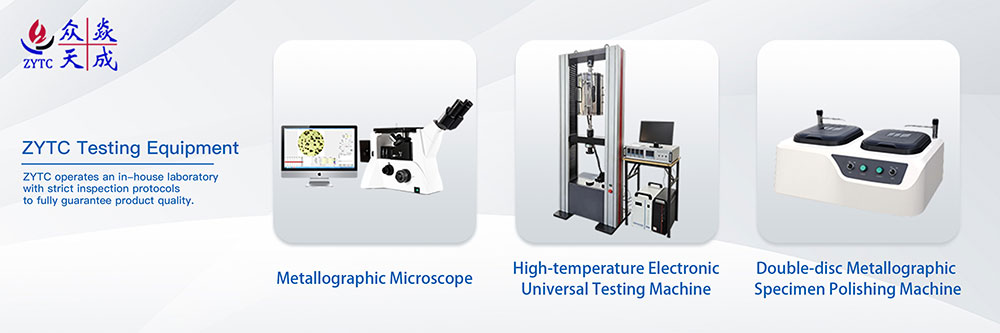
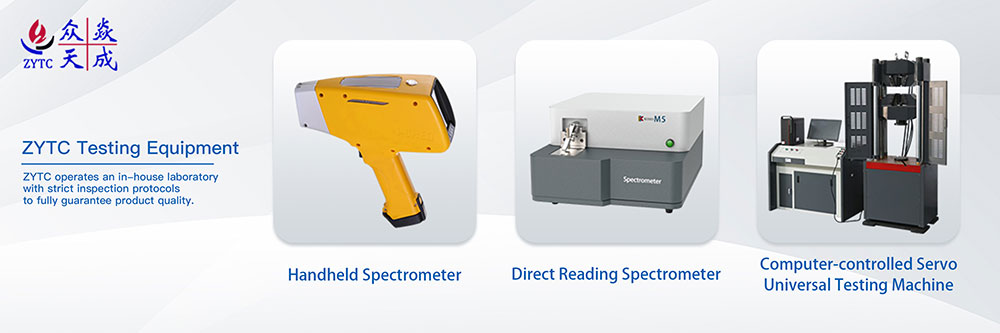
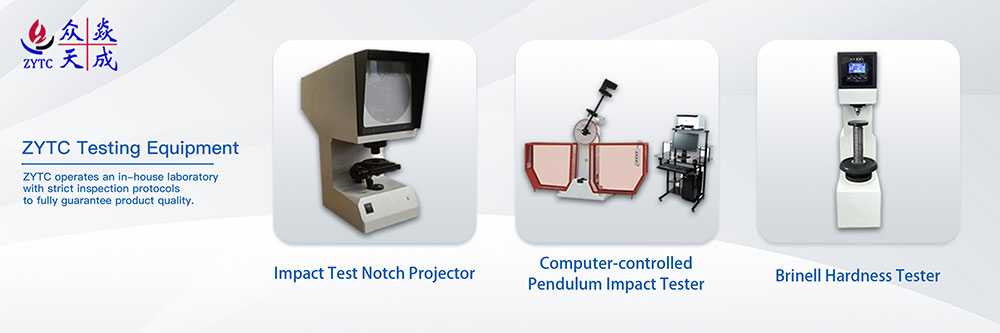
For expansion alloys like Alloy 42, small compositional deviations can directly cause seal failure. ZYTC performs the following verification before every batch leaves the facility:
-
Direct Reading Spectrometer Composition Verification: Confirms nickel content falls within the 40–42% window and monitors impurity elements such as manganese, silicon, and carbon.
-
CTE Sampling: Verifies thermal expansion curves on critical batches per ASTM F30 methods (or provides third-party test reports).
-
Mechanical Property Testing: Universal testing machine verification of tensile strength and elongation to ensure the supplied condition (annealed/cold-rolled) meets order requirements.
-
Surface Quality Inspection: Metallurgical microscope examination of surface defects and oxide layer condition, providing clean substrate for subsequent sealing processes.
7. Supply Forms and Quotation Requirements
Available Forms: Strip, bar, wire, plate, tube—custom slitting, shearing, or precision stamping available per customer drawings.
Please provide the following when requesting a quote:
-
Grade and Standard: Alloy 42 / UNS K94100 / ASTM F30 (or the corresponding 4J42 standard)
-
Form and Dimensions: Strip (thickness × width), bar (diameter), wire (diameter)
-
Supply Condition: Annealed / Cold-rolled
-
Quantity: Kilograms or meters
-
Special Requirements: CTE test reports, seal performance verification, surface roughness, etc.
📧 Email: dominic@zytc-steel.com
📱 WhatsApp/WeChat: +86 13132148618