
Permalloy 80 (Ni80 / UNS N14080): Magnetic Performance Verification & Processing Guide
Looking for Permalloy 80 pipe specifications and supply forms?
Permalloy 80 is specified not for its strength or corrosion resistance, but for its ability to respond to extremely weak magnetic fields and demagnetize almost completely when the field is removed. That behavior is not delivered by chemistry alone—it is the result of vacuum melting, controlled final annealing, and the absence of any subsequent processing that would reintroduce stress. This guide explains what actually determines the magnetic performance of Permalloy 80, where the verification gaps lie, and what processing restrictions apply once the material has been annealed.
What "Permalloy 80" Actually Specifies—and What It Doesn't
The designation Permalloy 80 (also written as Ni80, Alloy 80, PC-80, or 79НМ) describes a nickel-iron-molybdenum alloy with approximately 80% nickel and 4% molybdenum. The unified grade is UNS N14080, and the relevant flat-product standard is ASTM A753 Alloy 4.
What the designation does not specify is the magnetic performance. The product page correctly lists typical ranges: initial permeability 30,000–100,000, maximum permeability 100,000–500,000, coercivity ≤1.5 A/m. A range this wide exists because the final annealing process, not the chemistry certificate, determines where in that range the material lands.
Two batches with identical chemistry can differ by a factor of three in initial permeability if the final anneal is performed at different temperatures, holding times, or cooling rates. This is the central procurement reality for Permalloy 80: you are not buying a chemistry specification; you are buying a supplier's annealing capability.
The Processing Chain That Determines Magnetic Properties
① Vacuum induction melting (VIM). Residual impurities—carbon, sulfur, oxygen—pin magnetic domain walls and degrade permeability. VIM is not optional for Permalloy 80; it is the starting point. The nickel content must also be held within a tight window (typically ±0.5% around the target), because nickel content directly shifts the permeability and magnetostriction.
② Hot working within a narrow window. Permalloy 80 has a limited hot-working temperature range. Outside that range, cracking risk rises sharply. This is one reason why the alloy is not produced by every tube mill or strip mill—it requires process knowledge specific to the alloy.
③ Cold working with intermediate anneals. The alloy work-hardens rapidly. Reaching final thickness (or wall thickness, in the case of pipe) requires multiple cold-drawing or cold-rolling passes, with intermediate annealing between passes to restore ductility. Each intermediate anneal must be controlled to avoid contamination and to prepare the structure for the final anneal.
④ Final anneal: the step that activates the magnetic properties. High-temperature, long-time annealing in pure hydrogen or high vacuum relieves internal stress, optimizes grain structure, and produces the soft magnetic state. This is the single most important process step. If the final anneal is incomplete, or if the atmosphere does not reach all surfaces (a particular concern for tube bores), the magnetic properties will not meet specification regardless of chemistry.
Procurement implication: Ask the supplier to state the final annealing temperature, atmosphere, and holding time in the test report—not just "annealed." A report that says "final annealed in hydrogen at [temperature] for [time]" is a meaningful quality signal. A report that says only "conforms" is not.
Magnetic Acceptance Criteria: What to Write in the Purchase Order
The ranges on the product page are typical values. For procurement, convert them into testable acceptance criteria.
| Parameter | What to Specify | How to Verify |
|---|---|---|
| Initial permeability (μi) | Specify the minimum your design requires (e.g., ≥50,000, not just "within 30,000–100,000") | Toroidal sample test per agreed method; request the measured value, not just a pass/fail statement |
| Maximum permeability (μm) | Specify minimum; typical range up to 500,000 | Same toroidal sample test |
| Coercivity (Hc) | ≤1.5 A/m (or tighter if your application requires) | Same test report; request B-H curve data |
| Saturation induction (Bs) | 0.75–0.85 T | B-H curve data |
| Chemistry | Ni 78.50–80.50%, Mo 3.80–4.20%, with actual measured values | Spectrometer report with heat number traceability |
| Delivery condition | Final annealed; annealing temperature and atmosphere stated | Certificate must state parameters, not just "annealed" |
| Surface condition | No oxidation, no lubricant residue, no scale | Visual inspection; for tube, bore surface inspection |
A note on the μi range: If your application is magnetic shielding in a weak field, you likely need the higher end of the range. If your application is a less demanding transformer core, the lower end may be acceptable. Specify the minimum you can accept, and require the test report to show the actual measured value for the batch you receive.
Processing Restrictions After Final Anneal
Permalloy 80 achieves its magnetic properties through the final anneal. Any subsequent processing that introduces stress or heat will degrade those properties.
Welding is not acceptable on finished annealed material. The heat-affected zone loses its magnetic properties, and the stress cannot be relieved without re-annealing the entire component. If a welded assembly is required, the welding must be performed before the final anneal, and the final anneal must be the last thermal step.
High-temperature reheating is not acceptable. Brazing, coating cure, or any process that exposes the material to elevated temperature after the final anneal will cause grain growth or precipitation that degrades permeability. The final anneal must be the last thermal operation.
Severe cold deformation is not acceptable. Bending, swaging, or stamping a finished annealed part introduces work hardening and raises coercivity. If forming is required, it must be done before the final anneal, or the part must be re-annealed afterward.
Procurement implication: Buy finished-size, final-annealed material whenever possible. If secondary forming is unavoidable, specify that the supplier performs the final anneal after forming, not before.
Permalloy 80 vs. Other Soft Magnetic Alloys: When to Choose What
| Consideration | Permalloy 80 (N14080) | 1J79 (without Mo) | Silicon Steel | Nanocrystalline |
|---|---|---|---|---|
| Initial permeability | Very high (up to 100,000) | High, but lower than 80 | Moderate | High |
| Coercivity | Very low (≤1.5 A/m) | Low | Higher | Low |
| Saturation induction | ~0.75–0.85 T | Similar | High (>1.5 T) | ~1.2 T |
| Magnetostriction | Near zero (Mo addition) | Higher | Higher | Near zero |
| Cost | Premium | Moderate | Low | High |
| When to choose | Weak-field shielding, precision transformers, high-sensitivity relays | Cost-sensitive applications where magnetostriction is not critical | Power applications where high Bs matters more than weak-field sensitivity | High permeability plus higher Bs, where cost is justified |
The selection logic: Permalloy 80 is the right choice when you need maximum permeability in a weak field and can accept relatively low saturation induction. If your application requires high Bs or operates at higher power levels, silicon steel or nanocrystalline may be more appropriate despite their different trade-offs.
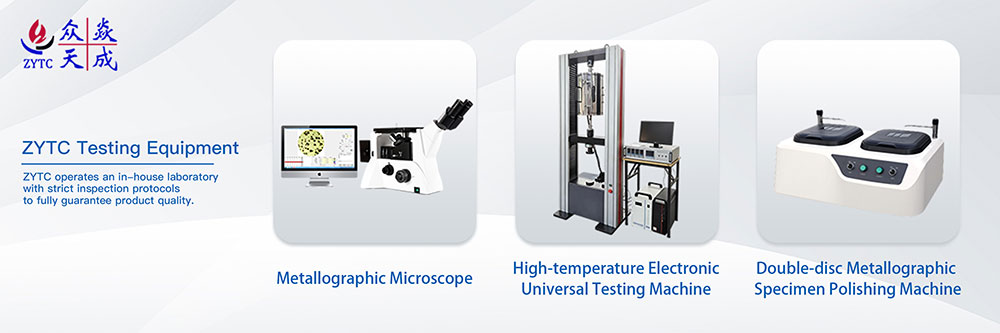
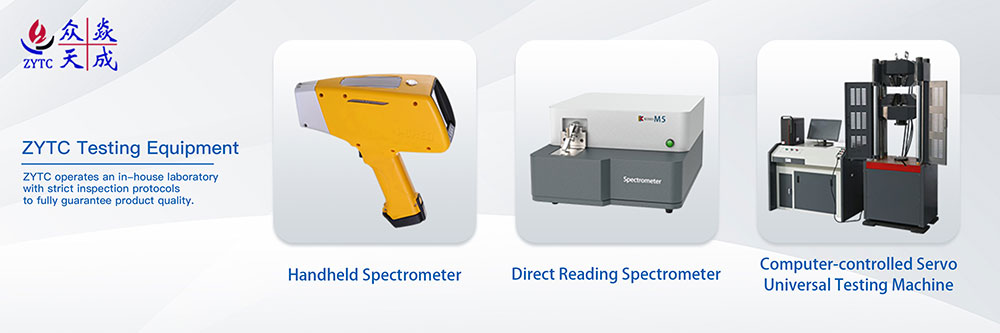
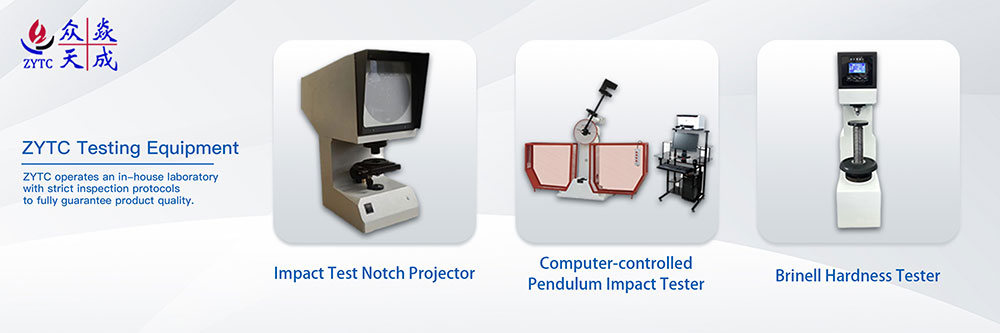
ZYTC's Verification for Permalloy 80
ZYTC verifies every batch of Permalloy 80 using:
-
Direct Reading Spectrometry: Confirms Ni and Mo within the specified windows and monitors residual impurities (C, S, P) that affect magnetic performance.
-
Magnetic Property Testing: Toroidal sample testing to confirm μi, μm, and Hc meet the specified acceptance criteria; batch-specific test reports are provided with B-H curve data.
-
Final Anneal Documentation: Annealing temperature, atmosphere, and holding time are recorded and stated in the test report, providing traceability for the step that determines magnetic performance.
Request a Technical Consultation
To receive a material recommendation and a quotation with batch-specific magnetic test data, please provide:
-
Application: Magnetic shielding, precision transformer, high-frequency transformer, relay, or other
-
Required magnetic parameters: μi minimum, Hc maximum, and operating frequency
-
Form and dimensions: Strip, sheet, bar, or pipe; thickness/OD/wall thickness and length
-
Surface requirement: Bare annealed, or specific cleaning/passivation
-
Quantity (kg or meters)
-
Certification: EN 10204 3.1 with batch-specific magnetic test report and annealing parameters
📧 Email: dominic@zytc-steel.com
📱 WhatsApp/WeChat: +86 13132148618