
Advantages & Industrial Applications of Precision Alloys | Ultimate Guide
What Are Precision Alloys?
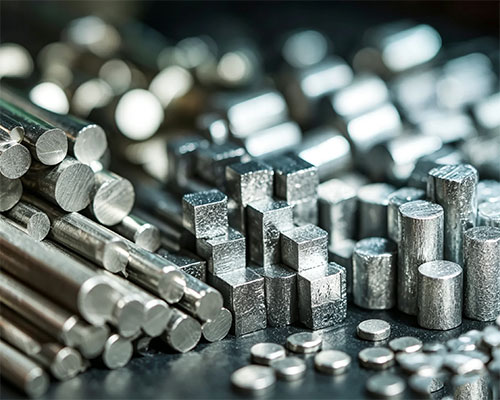
Precision alloys are high-performance functional metal materials engineered with precise chemical composition and strict manufacturing processes. Unlike ordinary structural metals that only focus on basic mechanical strength, precision alloys are customized for stable and specialized physical properties, including consistent thermal stability, reliable electrical performance, precise elasticity, and excellent corrosion resistance. These advanced materials maintain stable dimensional accuracy and functional performance even under extreme temperature changes, high mechanical load, and harsh corrosive environments.
Widely recognized as core foundational materials for high-end manufacturing, precision alloys support stable operation in aerospace, automotive, electronics, military, energy power, and precision instrument industries. As a professional China precision alloy manufacturer ZYTC Alloy, we develop and produce standardized and customized precision alloys, superalloys, and corrosion-resistant alloys that exceed conventional industrial benchmarks, helping global clients improve product stability, reduce maintenance costs, and gain technical advantages in precision manufacturing.
Core Industrial Advantages of Precision Alloys
The popularity of precision alloys in modern industry stems from their unique comprehensive performance that ordinary steel and general alloys cannot match. Their biggest advantage is ultra-high stability in complex working conditions, ensuring long-term precise operation of high-end components.
Second, excellent long-term durability and cost efficiency. Industrial equipment made of high-quality precision alloys features low failure rates and extremely low maintenance frequency. It effectively reduces production downtime and later replacement costs, delivering higher long-term return on investment for industrial projects.
Key Industrial Applications of Precision Alloys
-
Aerospace Industry: Used for lightweight structural parts, high-temperature components, and precision control parts. While reducing overall equipment weight, it ensures high strength and high-temperature oxidation resistance, improving flight safety and service life.
-
Automotive & Motorsports: Applied in precision sensor components, elastic structural parts, and high-load functional parts to enhance vehicle stability and fatigue resistance.
-
Electronic & Communication Industry: Widely used in 5G base station components, precision connectors, shielding parts, and resistance components, providing stable electrical conductivity and electromagnetic shielding performance.
-
Military & Defense: Adopted in high-precision instruments, extreme environment structural parts, and special functional components with strict reliability standards.
-
Energy & Power Industry: Suitable for high-temperature power equipment and thermal cycle components, maintaining stable performance under long-term temperature fluctuation.
Precision Alloy Performance Parameters & Professional Selection Guide
Engineering material selection must focus on actual working environments, functional requirements, and process adaptability. The following table systematically sorts out the core performance characteristics, industrial value, selection standards, and typical application scenarios of precision alloys, providing an intuitive reference for engineers and procurement teams.
|
Key Property
|
Industrial Importance
|
Best Selection Practices
|
Typical Applications
|
|---|---|---|---|
|
Corrosion Resistance
|
Prevents material deterioration in humid, saline, and chemical corrosive environments, greatly extending component service life and reducing equipment failure risks.
|
Evaluate actual environmental media, chemical contact frequency, and salinity concentration; select high-alloy grades for harsh corrosive conditions.
|
Marine engineering, petroleum and chemical industry, offshore equipment
|
|
Strength-to-Weight Ratio
|
Achieves lightweight structural design without sacrificing mechanical strength, optimizing equipment energy consumption and load capacity.
|
Prioritize high-strength precision alloys for weight-sensitive and high-load scenarios to reduce overall structural thickness and material usage.
|
Aerospace structures, automotive lightweight components
|
|
Thermal Stability
|
Maintains stable mechanical and physical properties under high temperature and thermal cycling, avoiding thermal deformation and performance attenuation.
|
Check official thermal performance data and temperature resistance thresholds; match alloy grades according to continuous working temperature.
|
Power generation equipment, aerospace thermal components, industrial furnaces
|
|
Machinability
|
Determines processing efficiency, finished product precision, and surface quality, suitable for fine cutting, bending, and precision forming.
|
Select alloys with balanced hardness and ductility to adapt to factory processing techniques and precision machining requirements.
|
Precision machinery parts, automotive finished components, instrument accessories
|
Professional Alloy Selection Tips for Engineers
Why Choose ZYTC Alloy as Your Precision Alloy Supplier?
ZYTC Alloy focuses on the R&D, production, and customized processing of high-end precision alloys, superalloys, and corrosion-resistant alloys. We strictly follow international ASTM standards and implement full-process quality control to ensure every batch of products features stable physical properties, accurate composition, and excellent surface finish.
Contact ZYTC Alloy Today
📧 Email: dominic@zytc-steel.com
📲 WhatsApp: +86 13132148618